
Replacing a Full Arch of Teeth: Dentures, Snap-On Dentures or a Fixed Bridge
How each stays in, what it involves, and what living with it is like
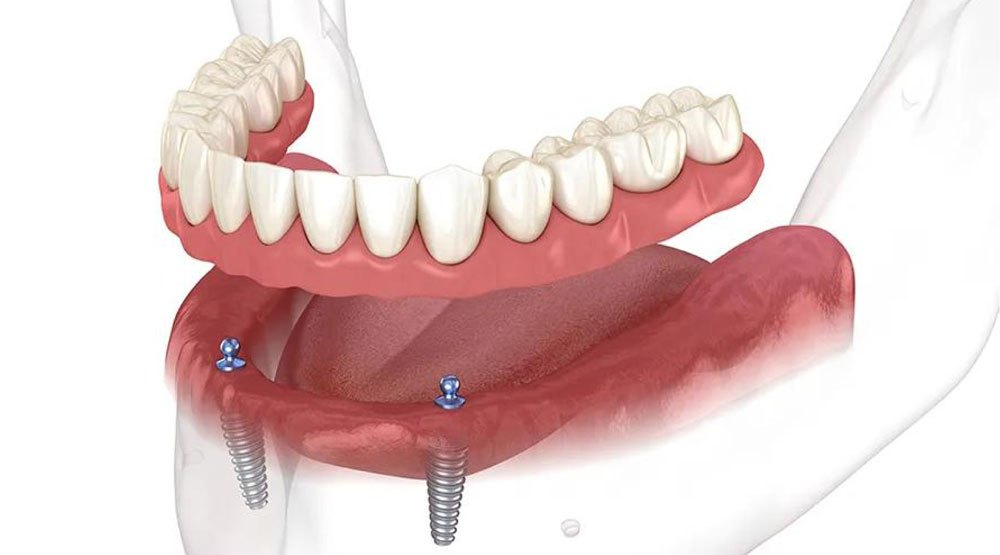
When most or all of the teeth in your upper or lower jaw are missing or failing, there are three main ways to replace them. They differ in how the teeth stay in place, how much treatment they need, and what they are like to live with.
Traditional Full Dentures
A full denture rests on your gums and is held by its close fit, suction and, for some people, a denture adhesive. It is made to your mouth, with teeth shaped and shaded to suit your face.
- What suits people about them: no surgery, you can take them out, and they are usually the quickest and least costly option to start with.
- The trade-offs: they can move when you eat or speak, and because nothing stimulates the jawbone, the gums and bone slowly change shape. Dentures then loosen and need relining or remaking.
If teeth are being removed, an immediate denture can be fitted the same day so you are not without teeth while you heal. See full dentures.
Snap-On (Implant-Supported) Dentures
A few implants, often two to four, are placed in the jawbone. Once they have healed, the denture clips onto attachments on the implants.
- What suits people about them: the denture stays put while you eat and speak, adhesive is rarely needed, and you still take it out to clean it. A lower snap-on denture can make a particular difference, because lower dentures have the least suction.
- The trade-offs: implant surgery and several months of healing, enough bone for the implants, and small attachments that wear and are replaced from time to time.
Fixed Full-Arch Bridges
A full arch of teeth is fixed to four or more implants — you may have heard this called All-on-4 or All-on-6. Only your dentist removes it.
- What suits people about them: the teeth feel fixed, there is no plate covering the roof of the mouth, and nothing comes out at night.
- The trade-offs: more implants and more planning, cleaning under the bridge with a water flosser or special brushes, and the highest upfront cost of the three.
Our implant-supported dentures page describes both implant options in more detail.
Side by Side
| Traditional denture | Snap-on denture | Fixed full-arch bridge | |
|---|---|---|---|
| How it stays in | Fit, suction, sometimes adhesive | Clips onto implants | Fixed to implants |
| Removed by you | Yes | Yes | No |
| Implant surgery | No | Yes, a few implants | Yes, four or more |
| Jawbone | Gradually shrinks | Kept in use where implants sit | Kept in use where implants sit |
| Cleaning | Taken out and brushed | Taken out; clean around implants | Water flosser or special brushes |
| Upfront cost | Lowest | Moderate | Highest |
Who Is a Candidate?
Almost anyone can wear a traditional denture. For the implant options we also look at:
- Whether there is enough bone for the implants, or a bone graft could rebuild it
- Gum health, and any infection that needs treating first
- Your medical history and medicines, which can affect healing
- Smoking, which slows healing and raises the risk of problems around implants
Living With Your New Teeth
The first few weeks
- Start with soft foods cut into small pieces, and chew on both sides at the same time
- Read aloud to get used to speaking with new teeth
- Expect a few sore spots; we adjust the denture to relieve them
Everyday care
- Brush removable dentures daily with a soft denture brush and a non-abrasive cleaner
- Keep them moist overnight in water or a soaking solution
- Clean your gums, tongue and any implants every day
- Handle dentures over a folded towel or a basin of water in case you drop them
- Keep up regular checkups, so we can check the fit, the attachments and the health of your gums
If a denture cracks, loosens or starts to rub, see denture repairs and relines.
Common Questions
Can my current denture be made to snap onto implants?
Sometimes. If your denture fits well and is in good condition, it may be possible to add attachments to it once the implants have healed. If not, a new denture is made. We'll check at your consultation.
How long does it take to get used to dentures?
Most people need a few weeks to get used to speaking and eating with a new denture. Start with soft foods cut into small pieces, chew on both sides at once, and practise reading aloud. Sore spots are common at first and can be adjusted.
Do snap-on dentures need special care?
Take the denture out every day to clean it and to clean around the implants. The small attachments that hold it in place wear with use and are replaced from time to time at your checkups.
Is a fixed full-arch bridge the same as an All-on-4?
All-on-4 is one common way of fixing a full arch of teeth to four implants; some arches use five or six. What they share is that the teeth are fixed and only your dentist removes them.
Weighing up your options?
Book a consultation and we'll explain which of the three suits you, with written estimates.

About Dr. Nagarjuna Meesa
Owner & Dentist at Smile Makers of Georgia
Dr. Nagarjuna Meesa is the owner and lead dentist at Smile Makers of Georgia. A graduate of New York University's College of Dentistry and a member of the Academy of General Dentistry, he provides restorative, cosmetic and family dentistry in Alpharetta.