
Gum Disease: Signs, Stages and Treatment
Why it starts quietly, how it progresses, and what treatment involves
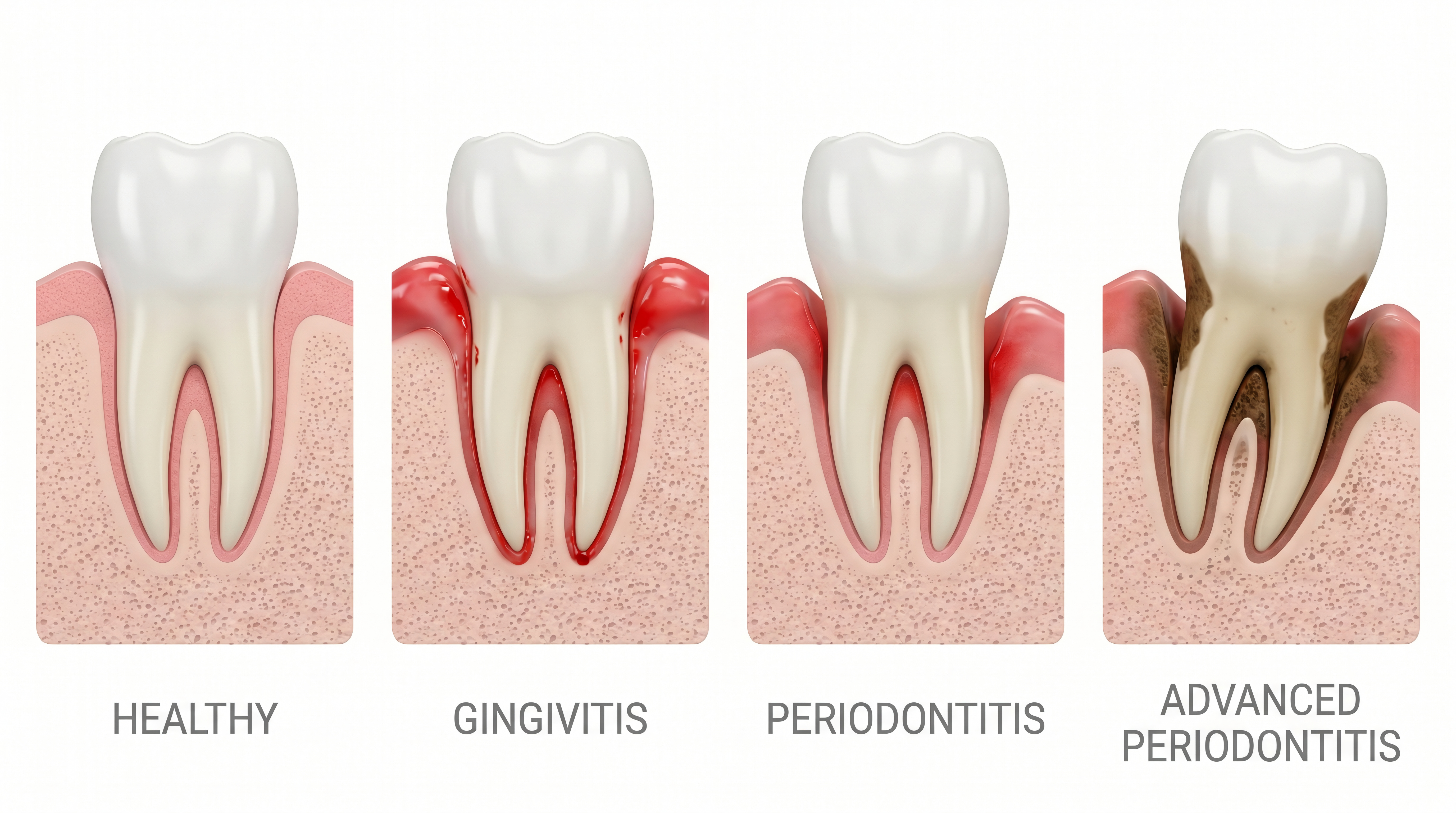
Gum disease is an infection of the gums and the bone that holds your teeth in place. It is one of the main reasons adults lose teeth, and in its early stages it rarely hurts — which is why so many people have it without knowing.
What Causes It
Plaque — a sticky film of bacteria — builds up along the gum line every day. What isn't removed hardens into tartar, and the bacteria in it inflame the gums. Some things make that more likely or more severe:
- Smoking or other tobacco use
- Diabetes
- Hormonal changes, including pregnancy
- Medicines that dry the mouth or affect the gums
- Crowded teeth or old fillings that are hard to clean around
- A family history of gum disease
Warning Signs
- Gums that bleed when you brush or floss
- Red, swollen or tender gums
- Bad breath or a bad taste that doesn't go away
- Gums pulling back, so teeth look longer
- Pus between the teeth and gums
- Teeth that feel loose or have started to move
How It Progresses
Gingivitis
The gums are red, swollen and bleed easily, but the bone is not yet affected. This stage can usually be reversed.
Periodontitis
Tartar has spread below the gum line, the gums start to pull away from the teeth and form pockets, and the bone around the teeth begins to break down.
Advanced periodontitis
The pockets are deep, much of the supporting bone is gone, and teeth may loosen, shift or be lost.
See periodontal deep cleanings for how we treat each stage.
How We Check Your Gums
At your checkup, the hygienist gently measures the depth of the small space between each tooth and the gum with a thin probe. Healthy gums have shallow spaces; deeper pockets and bleeding point to gum disease. X-rays show the level of the bone. We'll also ask about your health, medicines and whether you smoke, because they affect both the disease and the treatment.
Treatment
- For gingivitis: a professional cleaning, and better daily brushing and flossing, which we'll help with.
- For periodontitis: scaling and root planing, often called a deep cleaning. The area is numbed, tartar is removed from below the gum line, and the root surfaces are smoothed so the gums can reattach. It is often done a section of the mouth at a time. In some cases an antibiotic may also be placed in deep pockets.
- If pockets stay deep afterwards: gum surgery may be needed. It is carried out by a periodontist, a specialist in gum disease, and we'll talk it through with you if it applies.
After Treatment
- Expect tender gums and some sensitivity for a few days
- Come back for more frequent cleanings at first, often every three or four months
- Brush twice a day with a soft brush, and clean between your teeth daily with floss or interdental brushes
- Use a mouth rinse if we recommend one
- Stop smoking, and keep diabetes well controlled if you have it — both make a real difference to how gums heal
Why It Matters for Your Health
Research has found links between gum disease and other conditions, including diabetes and heart disease. Treating it protects your teeth, and it is also part of looking after your overall health.
Common Questions
Can gum disease be reversed?
Gingivitis, the early stage, can usually be reversed with a professional cleaning and better daily brushing and flossing. Once periodontitis has caused bone loss, that bone doesn't grow back on its own, but treatment can stop the disease from getting worse.
Why do my gums bleed when I floss?
Bleeding usually means the gums are inflamed by plaque along the gum line. Keep flossing gently; it often settles within a week or two as the gums get healthier. If it doesn't, have your gums checked.
Does a deep cleaning hurt?
The area is numbed first, so most people feel pressure rather than pain. Gums can be tender and teeth sensitive for a few days afterwards.
How often will I need cleanings after treatment?
Often every three or four months at first, so we can keep the bacteria in check and catch any return early. As your gums stay healthy, we'll adjust the schedule.
Does insurance cover gum disease treatment?
Many dental plans contribute toward deep cleaning and periodontal maintenance. We'll check your benefits and give you a written estimate before treatment.
Worried about your gums?
Book a checkup and we'll measure your gum health and explain what we find.

About Dr. Nagarjuna Meesa
Owner & Dentist at Smile Makers of Georgia
Dr. Nagarjuna Meesa is the owner and lead dentist at Smile Makers of Georgia. A graduate of New York University's College of Dentistry and a member of the Academy of General Dentistry, he provides preventive, restorative, cosmetic and family dentistry in Alpharetta.