
Are Dental Implants Right for You?
What an implant is, what it can replace, and what the treatment involves
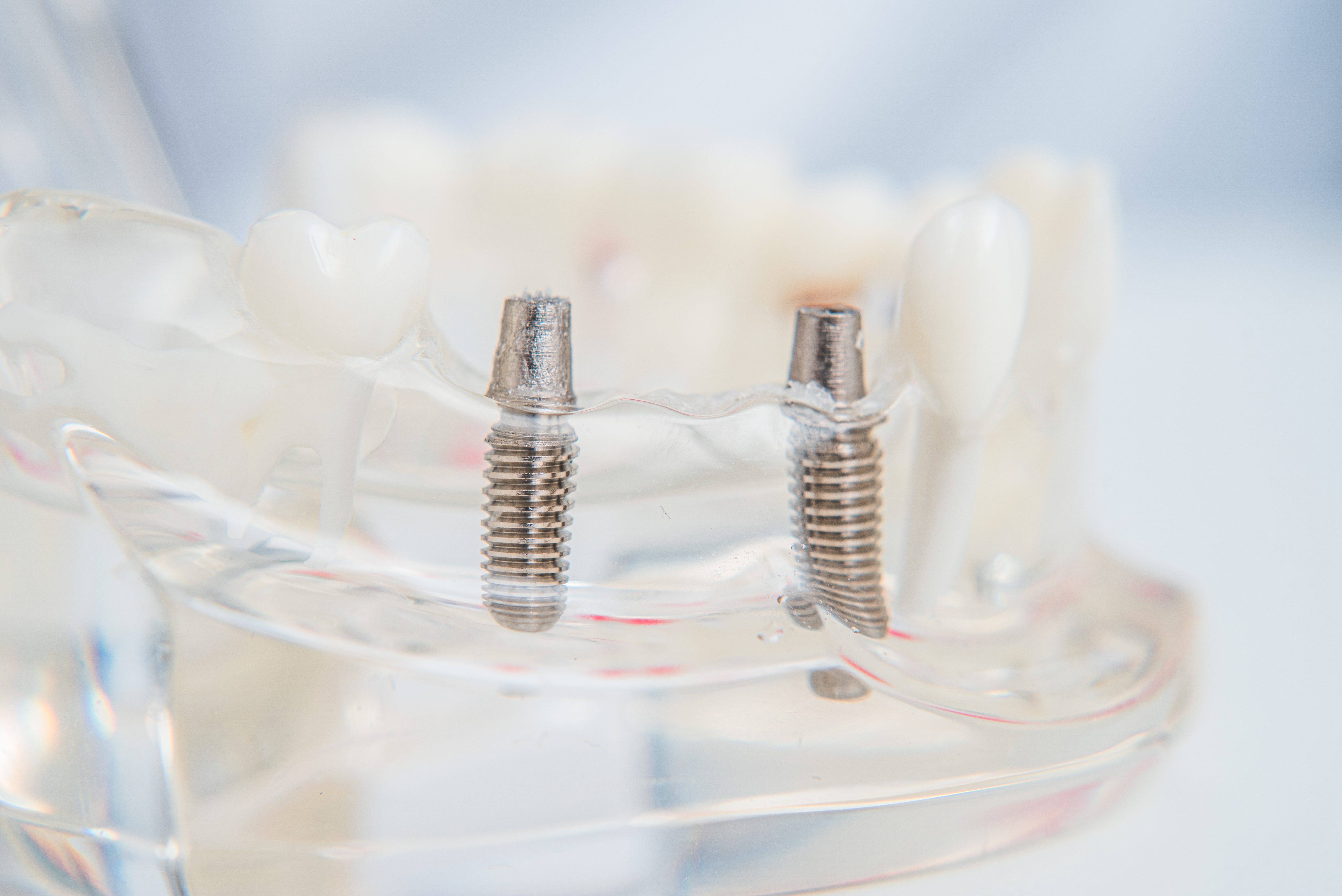
A dental implant replaces the root of a missing tooth as well as the tooth you can see. That is what sets it apart from a bridge or a denture, and it is also why the treatment takes longer. This guide explains what an implant is, what it can replace, and how to tell whether it suits you.
Why Replace a Missing Tooth at All?
A gap can seem harmless, especially toward the back of the mouth. Over time, though:
- Neighboring teeth can tilt or drift into the space, changing how your teeth meet
- The tooth above or below the gap can grow down or up toward it
- The jawbone where the root used to be gradually shrinks, because nothing is stimulating it
- Chewing shifts to the other side, which can wear those teeth faster
What Is a Dental Implant?
An implant is a small titanium post placed in the jawbone where the tooth root used to be. Over several months the bone grows around it and holds it firmly — a process called osseointegration. A complete implant tooth has three parts:
- The implant — the post in the jawbone that acts as the root
- The abutment — a connector that attaches to the top of the implant
- The crown — the tooth you see, made to match the shape and shade of your own teeth
What an Implant Can Replace
- One tooth — a single implant and crown, with no work on the teeth either side
- Several teeth in a row — an implant-supported bridge, where two implants can hold three or more teeth
- A whole arch — a denture that snaps onto implants, or a fixed full-arch bridge. See replacing a full arch of teeth for how those compare
How an Implant Compares
| Implant | Bridge | Partial denture | |
|---|---|---|---|
| Fixed or removable | Fixed | Fixed | Removable |
| Teeth either side | Left untouched | Shaped to hold crowns | Clasps may rest on them |
| Jawbone under the gap | Kept in use by the implant | Not stimulated | Not stimulated |
| Surgery | Yes | No | No |
| Time to finish | Several months | A few weeks | A few weeks |
| Cleaning | Brush and floss as normal | Floss threaded under the bridge | Taken out to clean |
None of these is right for everyone. A bridge can be the better choice when the teeth either side already need crowns, and a partial denture when several teeth in different places are missing or surgery isn't an option. Our guide to replacing missing teeth goes through each.
The Implant Process
- Consultation and planning. We examine your mouth and take X-rays and a 3D (CBCT) scan to see how much bone there is and where the implant should go. If there isn't enough bone, a bone graft may come first.
- Placing the implant. The implant is placed under local anesthesia; sedation is available if you're anxious. Soreness and swelling for a few days is normal.
- Healing. Over the next several months the bone bonds to the implant. Where it matters for your appearance, a temporary tooth fills the gap in the meantime.
- The crown. Once the implant is secure, the abutment is attached and your custom crown is fitted.
For the options we place and our own process, see dental implants & teeth replacement.
Are You a Good Candidate?
Most adults who are missing teeth can be considered for implants. What we look for:
- Healthy gums. Gum disease is treated first, because it can damage the bone around an implant.
- Enough bone, or a bone graft to rebuild it.
- Not smoking, or being willing to stop. Smoking slows healing and raises the risk of problems around the implant.
- Your health history. Some medical conditions and medicines affect healing, so we go through yours before recommending treatment.
Caring for an Implant
- Brush twice a day and floss daily, including around the implant
- Keep up regular checkups and cleanings, so we can check the gum and bone around it
- Don't chew ice, hard candy or other very hard things
- Wear a night guard if you grind your teeth and we recommend one
What Affects the Cost
The cost depends on how many implants you need, whether a bone graft or extraction comes first, and what goes on top — a single crown, a bridge or a denture. You'll receive a written estimate before any treatment, and you can read about insurance, financing and our membership plan.
Common Questions
Does getting an implant hurt?
The implant is placed under local anesthesia, and sedation is available if you are anxious, so most people feel pressure rather than pain. Some soreness and swelling for a few days afterwards is normal and is usually managed with over-the-counter pain relief.
How long does the whole process take?
Usually several months from placing the implant to fitting the final crown, because the implant needs time to bond with the bone. If a bone graft is needed first, add the time that graft takes to heal. We'll give you a timeline for your own treatment.
How long do dental implants last?
With good brushing and flossing, regular checkups and no smoking, an implant can last for many years. The crown on top may need replacing at some point, as any crown can.
I was told I don't have enough bone. Can I still have an implant?
Often, yes. A bone graft can rebuild the area before the implant is placed. We'll look at your 3D scan and tell you whether that applies to you.
Does insurance cover implants?
Some plans contribute toward part of the treatment, such as the crown. We'll check your benefits and give you a written estimate before anything begins, and financing is available.
Missing a tooth?
Book a consultation and we'll explain every option, including whether an implant suits you.

About Dr. Nagarjuna Meesa
Owner & Dentist at Smile Makers of Georgia
Dr. Nagarjuna Meesa is the owner and lead dentist at Smile Makers of Georgia. A graduate of New York University's College of Dentistry and a member of the Academy of General Dentistry, he provides restorative, cosmetic and family dentistry in Alpharetta.