
Fillings, Crowns or a Bridge: Which Repair Does Your Tooth Need?
How the size of the damage decides the repair, and what each one involves
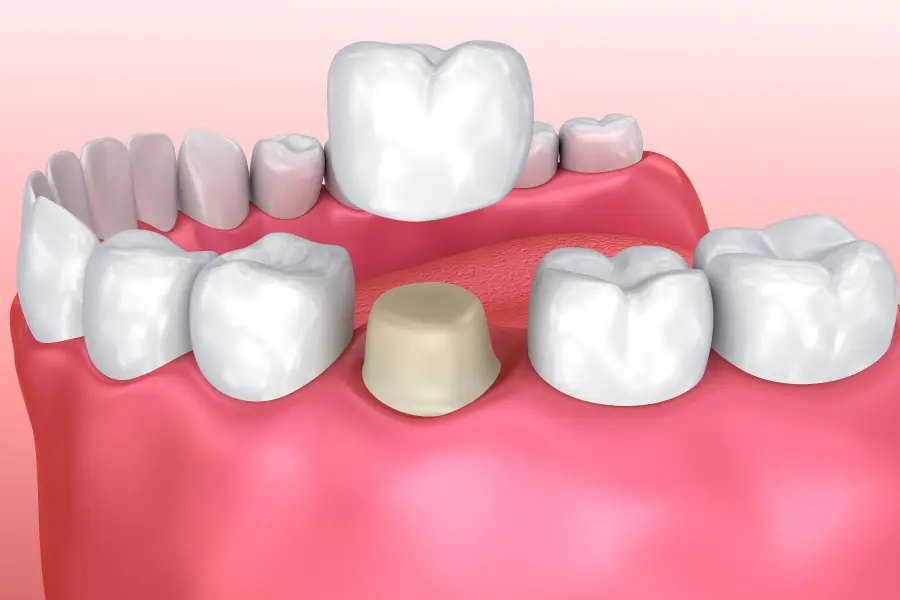
Most damaged teeth can be saved, and the repair is matched to how much of the tooth is affected. A small cavity needs a filling. A tooth that is badly broken down needs a crown. A tooth that is already gone can be replaced with a bridge. This guide explains where each one fits.
Fillings: For Cavities and Small Damage
A filling repairs a tooth where decay, a small chip or wear has taken away part of it. The damaged part is removed and the space is filled so the tooth has its shape and strength back, and decay can't go deeper.
Signs you may need one
- Sensitivity to sweet, hot or cold things
- A sharp edge, a small hole or a dark spot on a tooth
- Food catching in the same place
- Pain when you bite down
Many cavities cause no symptoms at all until they are large, which is why they are usually found at a checkup or on an X-ray.
What happens
The tooth is numbed, the decay is removed, and we place a tooth-colored composite filling in layers, hardening each with a light. It is then shaped to your bite and polished. Most fillings are done in one visit. See tooth-colored fillings.
Crowns: When a Filling Isn't Enough
A crown is a custom-made cap that covers the whole visible part of a tooth. A tooth usually needs one when too little of it is left to hold a filling securely:
- A large cavity, or a large old filling with little tooth around it
- A cracked or broken tooth
- A back tooth after a root canal
- A tooth worn down by grinding
- A badly discolored or misshapen tooth, for appearance
What happens
- We examine the tooth and take X-rays, and treat any decay or infection first.
- The tooth is numbed and shaped so the crown can fit over it.
- We take a digital scan or impression, and fit a temporary crown to protect the tooth.
- At a second visit, the permanent crown is checked for fit, bite and color, and cemented in place.
Crowns can be made of porcelain, zirconia, porcelain fused to metal, or gold, depending on where the tooth is and how much force it takes. See dental crowns.
Bridges: When a Tooth Is Missing
A bridge fills a gap with a replacement tooth held in place by the teeth either side. Those teeth are shaped and crowned to anchor it. It is fixed, so you don't take it out.
- A traditional bridge is held by crowns on the neighboring teeth.
- An implant-supported bridge is held by implants instead, so the neighboring teeth are left alone.
- A resin-bonded (Maryland) bridge is held by small wings bonded to the backs of the neighboring teeth, usually for a front tooth.
A bridge makes most sense when the teeth either side already need crowns. If they are healthy, an implant may be worth considering. Our guide to replacing missing teeth compares the options, and dental bridges explains the types in more detail.
Side by Side
| Filling | Crown | Bridge | |
|---|---|---|---|
| Used for | Cavities, small chips, wear | Large damage, cracks, after a root canal | One or more missing teeth |
| Visits | Usually one | Usually two | Usually two |
| Tooth shaping | Only the damaged part | All around the tooth | The teeth either side |
| Cleaning | Brush and floss as normal | Brush and floss as normal | Floss threaded under the bridge |
Looking After Repaired Teeth
- Brush twice a day and floss daily, paying attention to where the filling or crown meets the tooth
- Don't chew ice, hard candy, pens or fingernails
- Wear a night guard if you grind your teeth and we recommend one
- Keep up regular checkups, so wear or decay at the edges is caught early
Worth getting checked
- A filling or crown that feels rough, high or loose
- Floss that shreds or catches in the same place
- New sensitivity around an old filling
- A dark line where a crown meets the gum
Common Questions
Does getting a filling hurt?
The tooth is numbed first, so most people feel pressure and vibration rather than pain. It is common for a filled tooth to be a little sensitive to hot, cold or pressure for a few days. If it still hurts when you bite after that, call us — the filling may need a small adjustment.
How long do fillings and crowns last?
It depends on the size of the repair, where it is in the mouth, whether you grind your teeth, and how well the edges are kept clean. We check every filling and crown at your regular checkups, so wear or decay at the edges is caught early.
Can old silver fillings be replaced with tooth-colored ones?
Often, yes — particularly when an old filling is cracked, leaking or has decay around it. A filling that is still sound doesn't have to be replaced. We'll tell you which of yours are worth replacing and why.
Why does a tooth need a crown after a root canal?
A tooth that has had a root canal has usually lost a lot of its structure, and back teeth take heavy chewing forces. A crown covers and strengthens it so it is less likely to crack.
Does insurance cover fillings, crowns and bridges?
Most dental plans contribute toward fillings, and many toward crowns and bridges. We'll check your benefits and give you a written estimate before treatment.
Not sure what your tooth needs?
Book an exam and we'll show you on the X-ray and explain your options.

About Dr. Nagarjuna Meesa
Owner & Dentist at Smile Makers of Georgia
Dr. Nagarjuna Meesa is the owner and lead dentist at Smile Makers of Georgia. A graduate of New York University's College of Dentistry and a member of the Academy of General Dentistry, he provides restorative, cosmetic and family dentistry in Alpharetta.